by Tawni Anderson | Mar 18, 2009 | Uncategorized, Zen
I’ve been talking lately about choosing to change. Change can be very difficult, whether it’s a major change or even just something relatively small. But choosing to change, and acting on that decision, increases our personal power and, if we stay with “what is”, also makes us happier. What is it that we’re afraid of? Why do we protect ourselves from our own power? Why are we afraid to take paths that will empower us? If we all did what we wanted, if we were fully empowered, what would be so wrong with that?
Well, other people might be unhappy.
And sometimes this is the excuse we use: we won’t mix things up for fear, say, of upsetting our spouse. But what this really means is that we don’t want the anxiety of worrying about hurting that person.
But everything you do will work out just fine if you just do what you want to do. Be yourself. For many who were raised in a Judeo-Christian tradition, there’s an underlying belief that we think we’re somehow “bad.” We fear that if we were truly empowered, we’d be bad or do bad things.
But whatever you feel, you’re going to feel anyway. The difference is when you’re empowered, you’ll also be doing what you want. If you don’t take your power, you’ll still feel the same way, but you also won’t be doing what you want.
The difference between empowerment and non-empowerment is fear. Nothing gives you energy like not being afraid and doing what you want. When you avoid living, you cheat everyone around you too, because they don’t get the benefit of who you really are. So as long as you’re not, say, an addict, you’re not going to do harm by doing what you want.
Be in the moment, always, but choose to change your life if that is what you want. You’ll be happier, and so will the people around you.
(Adapted from a talk given by Doen Sensei, November 2007)
by Tawni Anderson | Mar 5, 2009 | Uncategorized, Zen
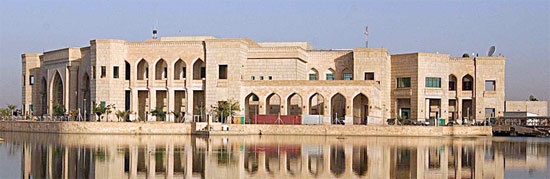
This week I was reminded of a story that Doen Sensei told me a few years ago. He has repeated it a number of times since then. There was a traveler in Iraq who was traveling through the desert. He found himself stranded one night, about a mile from Baghdad. This was at a time when Baghdad was a great center of civilization; there were wonderful libraries, works of art, and pleasures of many kinds.
As was the custom, any traveler on their way to Baghdad who had not reached it by nightfall and was stranded in the desert would be taken in by the desert people and offered food and drink, and so the visitor was invited into a family’s tent. They talked, and at one point the man asked them what they thought of Baghdad. “Why, we’ve never gone to Baghdad! Why would we?” they responded. “We have everything we need right here. We have the most delicious food, and the finest drink.”
Later, they served food to the traveler. It was desert rat, and it was rancid and salty. The traveler asked for the “wonderful” drink, hoping their “finest” would wash away the taste of the rat. But it was salt water.
The moral of the story is: always see in your life if you are just one mile from Baghdad and living on rats and saltwater.
photo by jamesdale10
by Daniel Doen Silberberg | Feb 16, 2009 | Uncategorized, Zen
So, an important part of our practice is deciding to choose what is. What I am often asked next is: what if I’m in an unhappy marriage? What if I hate my job? Does that mean I need to choose to stay in that situation?
Absolutely not. That view is too simplistic. Choosing what is, choosing to be where you are, is another way to speak of being in the moment. In other words, you’re not choosing a situation, you’re choosing the moment. So you’re sitting there in a crummy marriage, feeling a certain way, you’re choosing to be in the crummy marriage, you’re choosing to be alive to being in the crummy marriage. You’re in the moment. And at the same time, if you want to, you can be choosing to figure out how to leave. Staying in the moment of “what is” and at the same time choosing to change “what is” aren’t contradictory.
You don’t have to choose to be stuck where you are. You choose to be where you are. Where you are might be “in the midst of change.” But then be with the process of being in the midst of change and don’t hold your breath until the change has occurred. If you’re in turmoil, choose to experience that turmoil. You can also choose a plan that you hope will get you out of turmoil, but then you’re also choosing to be with that, in the flow of moving. In other words, you’re with what you’ve got, you’re choosing to be with what is, choosing to be in the moment, even if that moment is “movement” or “chaos” or “change”. Wherever you are in your life, at any given moment, when you accept that completely and choose that, they say that is enlightenment.

Recent Comments